
- Key Facts
- Rating7.6/10
- Why this pickIts dual-lens design (telephoto for deep-sky/lunar, wide-angle for daytime and scenery) is a genuinely different approach from the single-lens Seestar S50/S30, at the same $549 price point.
Pros
- Dual-lens design covers both deep-sky/lunar and daytime/wide-field use
- Same price tier as the Seestar S50 with a genuinely different feature set
- Confirmed real, purchasable product at a named US retailer
Cons
- Sold out at Explore Scientific at the time of writing, availability can't be guaranteed
- Smaller company than ZWO, less of a track record in this category
- App/ecosystem maturity trails ZWO's Seestar line
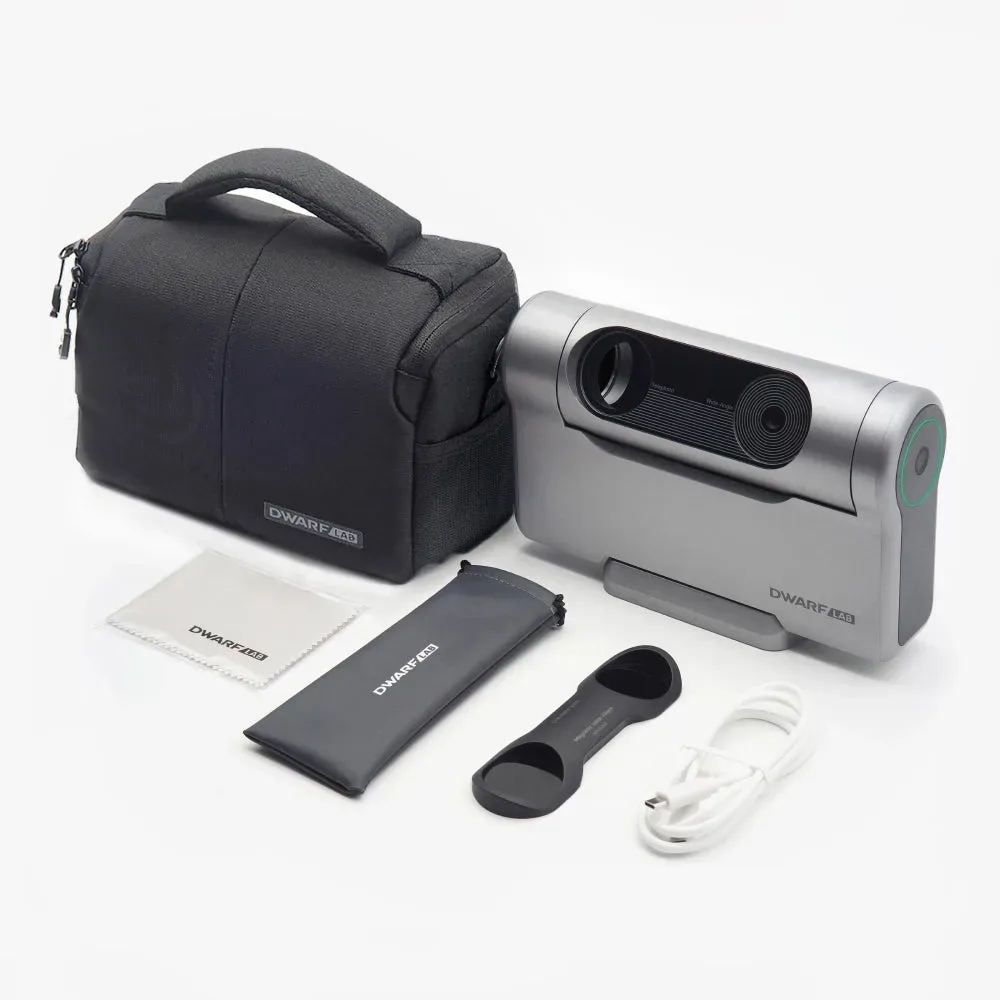
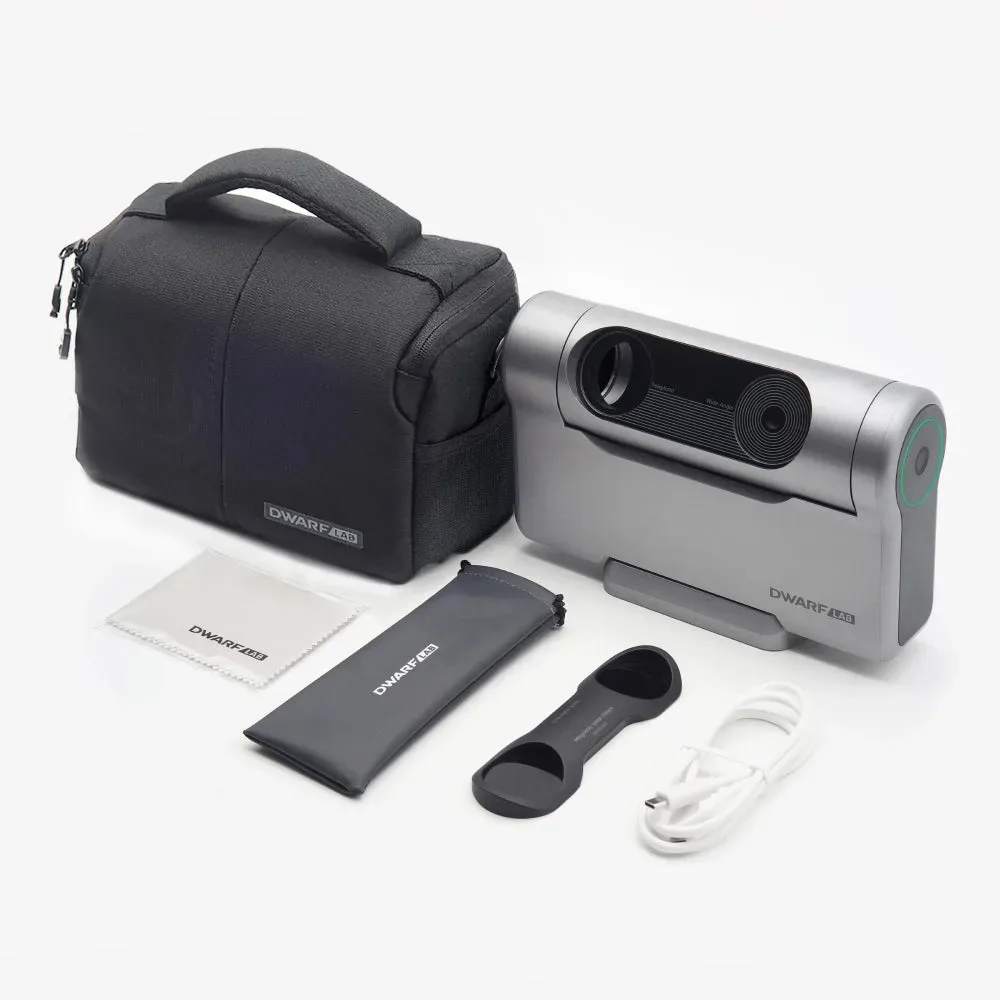
The Dwarf 3 competes directly with the ZWO Seestar S50 at the exact same $549 price, but it solves the problem differently. Instead of one fixed-aperture tube, it puts two separate cameras in one body: a telephoto lens for deep-sky and lunar shots, and a wide-angle lens for scenery and daytime use F001 F007.
What's actually inside it
The telephoto lens has an 8.3-megapixel Sony IMX678 Starvis 2 sensor behind a 737mm-equivalent focal length, rated at 83% quantum efficiency with very low readout noise F001. That's the lens doing the actual astronomy. The second, wide-angle lens is a smaller 2-megapixel unit at a 45mm equivalent focal length, closer to a regular camera than a telescope, meant for framing the sky, timelapse, or daytime shooting when you're not deep-sky imaging F001.
Three built-in filters cover the main use cases: a standard filter, an astronomical filter, and a dual narrowband OIII + H-alpha filter for pulling nebula detail out of light-polluted skies. Exposures go up to 60 seconds, the field of view is 3 degrees, and the app supports multi-night stacking so you can keep adding exposure time to the same target across several sessions instead of starting over.
Build and battery
At 1.3-1.35kg, the Dwarf 3 is noticeably lighter than the Seestar S50's 2.5kg, and it's rated for use in temperatures from -20C to 45C with IP54 dust and dew resistance. Battery life is rated at up to 5.5 hours at room temperature, real-world time will run shorter in cold weather, the same trade-off every battery-powered smart telescope makes. The included kit covers the basics: a carrying bag, a magnetic ND solar filter for daytime solar observing, a USB-C cable, and a lens cleaning cloth.
Dwarf 3 vs Seestar S50
| Model | Price | Design | Weight | Best For |
|---|---|---|---|---|
| Dwarf 3 | $549 F007 | Dual-lens (telephoto + wide-angle) F001 | 1.3-1.35 kg | Wider field of view, lighter, daytime/wildlife dual use |
| ZWO Seestar S50 | $549 | Single 50mm apochromatic lens | 2.5 kg | Larger aperture, dedicated deep-sky imaging |
If you want a single device that's genuinely useful for daytime wildlife and travel photography as well as astronomy, the Dwarf 3's second lens earns its keep. If astronomy is the only thing you care about, the Seestar S50's larger, purpose-built single aperture is the more direct tool, see our full Seestar S50 review for the complete comparison.
Where to buy it
Explore Scientific lists the Dwarf 3 at the same $549 as the manufacturer, but it was marked sold out at the time of this research (2026-08-20), along with every other Dwarf Lab and Unistellar product in that category F007. That's worth knowing before you click through expecting to check out immediately, check current stock before assuming it's available.
Verdict
The Dwarf 3 is the right pick over the Seestar S50 if portability and daytime versatility matter as much as deep-sky imaging to you. It's the wrong pick if you specifically want the largest single aperture at this price point, in which case the Seestar S50 wins on raw light-gathering. Both are currently affected by stock shortages across US retailers, so availability may end up deciding for you regardless of which specs you prefer.