
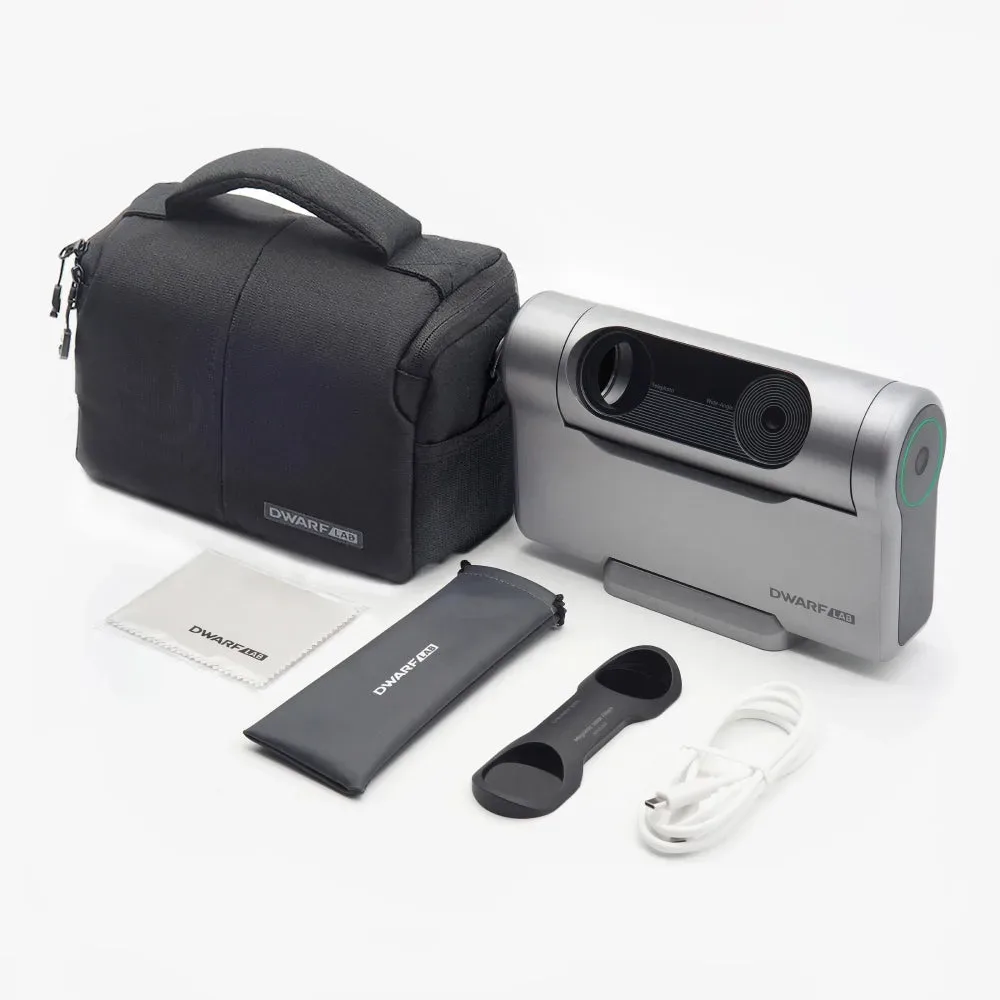
- Key Facts
- Rating7.6/10
- Why this pickIts dual-lens design (telephoto for deep-sky/lunar, wide-angle for daytime and scenery) sits at the same $549 price point as the ZWO Seestar S50 but takes a genuinely different approach, which makes it a useful reference point before you dig into the individual reviews below.
Pros
- Dual-lens design covers both deep-sky/lunar and daytime/wide-field use
- Mid-range price with a genuinely different feature set than single-lens rivals
- Confirmed real, purchasable product at a named US retailer
Cons
- Sold out at Explore Scientific at the time of writing, availability can't be guaranteed
- Smaller company than ZWO, less of a track record in this category
- App/ecosystem maturity trails ZWO's Seestar line
A smart telescope replaces the eyepiece with a phone screen and the manual star-hopping with an app that finds and tracks the target for you. Five models cover most of what people actually buy in this category, spanning $399 to nearly $5,000, and the right one depends almost entirely on your budget and whether you want the largest possible aperture or the lightest possible travel setup.
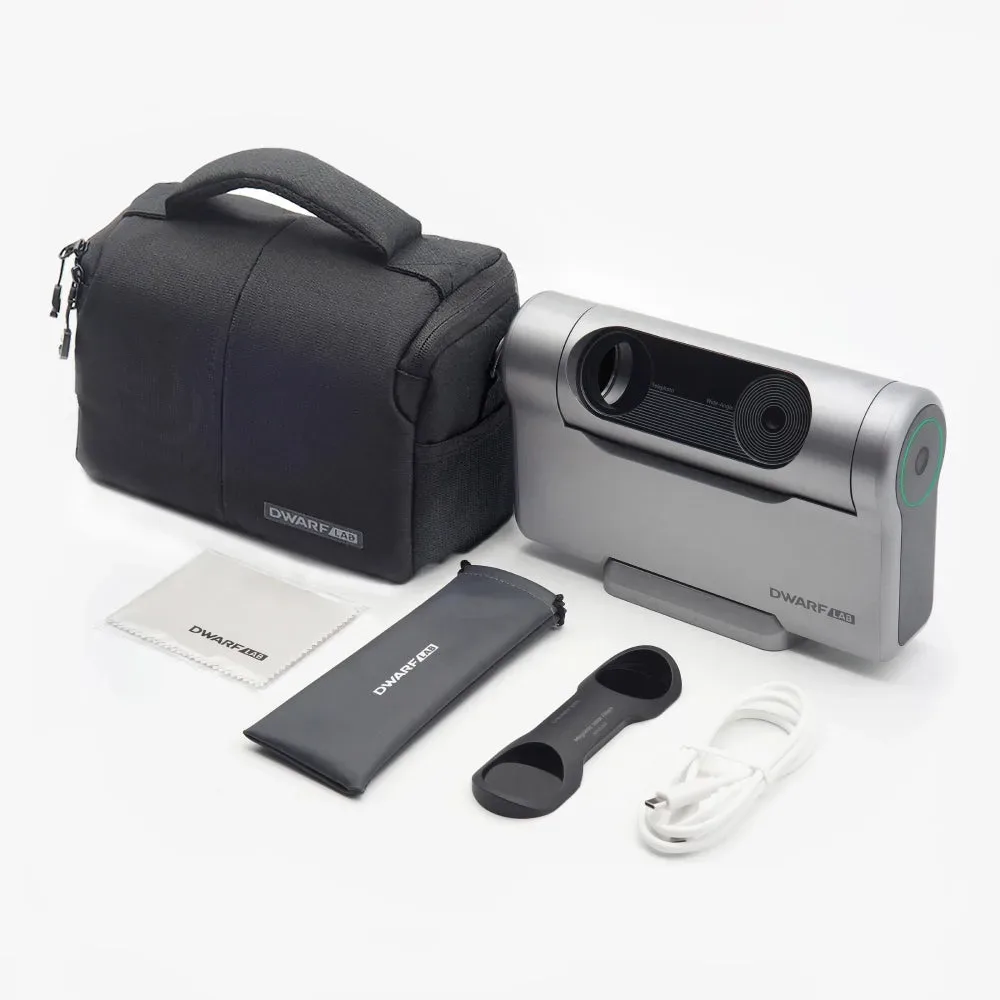
Smart Telescopes Compared
| Model | Price | Aperture | Weight | Best For |
|---|---|---|---|---|
| ZWO Seestar S50 | $549 | 50mm | 2.5 kg | Best all-round value for dedicated deep-sky imaging |
| ZWO Seestar S30 / S30 Pro | $399 / $699-888 | Not published (base) / dual-lens (Pro) | 1.65 kg (Pro) | Cheapest entry point |
| Dwarf 3 | $549 | Dual-lens, 737mm eq. telephoto | 1.3-1.35 kg | Lightest, best for travel and daytime dual-use |
| Vaonis Vespera II | From €1,590 | 50mm | 5 kg | Better build quality and panorama imaging |
| Unistellar eVscope 2 / eQuinox 2 | $4,999 / $2,899 | 114mm | 9 kg / 7 kg | Largest aperture, real eyepiece (eVscope 2 only) |
Full specs, real-world verdicts, and current stock status for each model are in their dedicated reviews, linked below.
How to pick between them
If you're deciding purely on price, the Seestar S30 ($399) is the cheapest, but ZWO's own product page doesn't publish an aperture or battery figure for the base model, see our Seestar S30 review for exactly what that gap in the spec sheet means before you buy it.
If you want the best balance of price and capability, the Seestar S50 is the most-searched product in this entire silo for a reason: a real 50mm aperture, a dual-band light-pollution filter, and a $549 price that undercuts everything else with a fixed, purpose-built optical design.
If portability matters more than raw aperture, the Dwarf 3 weighs about half what the Seestar S50 does and adds a second wide-angle lens for daytime and wildlife shooting, at the same $549 price.
If you want noticeably better optics and build quality and don't mind paying for it, the Vaonis Vespera II adds a live panorama feature (CovalENS) that none of the cheaper models offer, starting around €1,590.
If you want the largest aperture and an actual eyepiece to look through, the Unistellar eVscope 2 is the only model here with real 114mm reflector optics and a physical eyepiece, at a $4,999 price that puts it in a different category from everything else on this page.
A note on stock
As of this research (2026-08-20), availability across this entire category was unusually tight: OPT Telescopes had no ZWO Seestar listings at all and only sold-out Vaonis listings, and Explore Scientific's whole smart-telescope category, every Dwarf Lab and Unistellar product it carries, was marked sold out. Check the individual review pages for the current status of the specific model you're considering, since stock changes faster than this comparison can track.