
- Key Facts
- Rating8/10
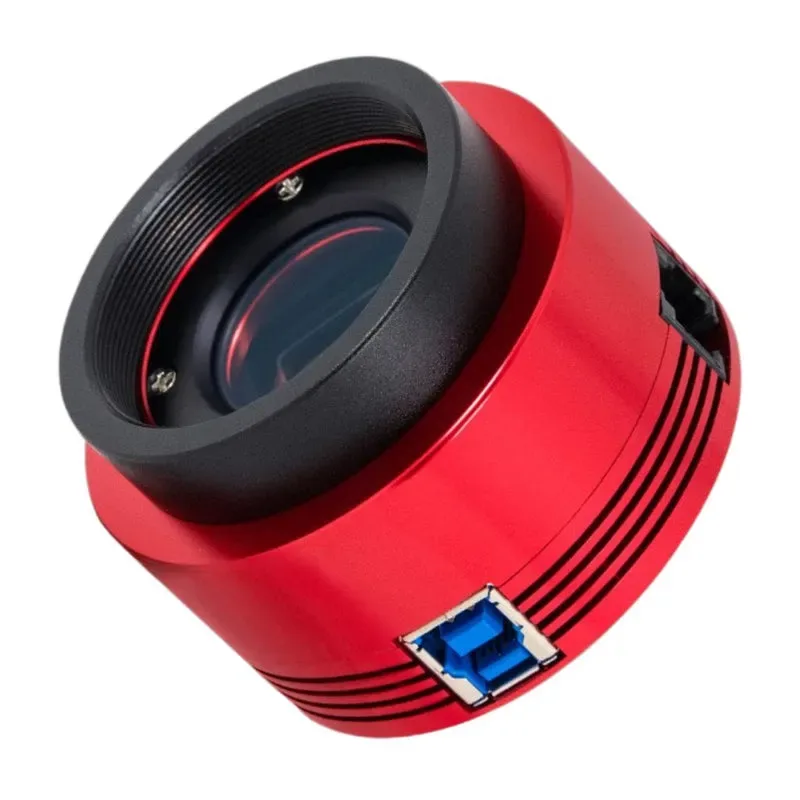
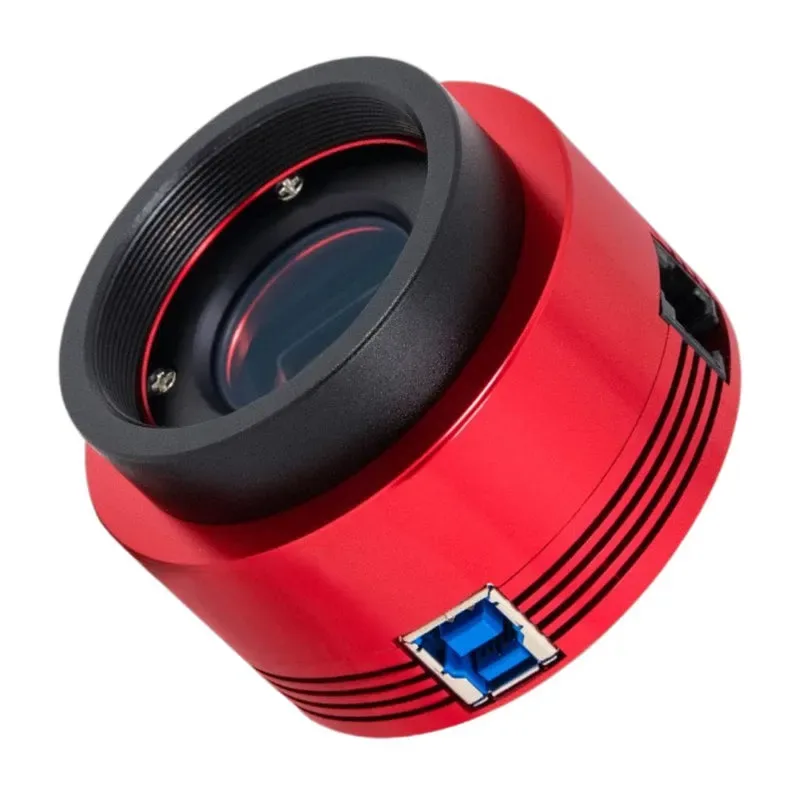
- Why this pickIts 1-inch square sensor format avoids the wasted corners of a rectangular chip on round telescope images, and at $599 it's the uncooled version of the same sensor used in the pricier ASI533MC Pro, a real upgrade path exists if you outgrow it, but most beginners won't need cooling right away.
Pros
- Square sensor format is a genuine advantage for deep-sky framing
- Same sensor as the cooled Pro version, at a lower entry price
- USB 3.0 keeps up with longer imaging sequences
Cons
- No active cooling, thermal noise increases on hot nights
- Needs a laptop or ASIAir controller running, not a standalone device
- Small sensor compared to the 26MP ASI2600MC Pro, for buyers set on wide fields
ZWO doesn't make traditional telescopes. What it makes is the camera and mount ecosystem that a huge share of amateur astrophotographers actually shoot with: the ASI line of dedicated CMOS cameras, the AM3 and AM5 tracking mounts, and the ASIAIR controller that ties everything together. If you've decided a dedicated camera makes more sense than a DSLR, this is the lineup you're choosing from.
The ASI camera lineup, model by model
| Model | Sensor | Resolution | Pixel Size | Cooled? | Best For |
|---|---|---|---|---|---|
| ASI224MC | Sony IMX224, 1/3" | 1304x976 (1.2MP) | 3.75 µm | Yes | Planetary and small deep-sky targets |
| ASI585MC Pro | Sony IMX585, 1/1.2" | 3840x2160 (8.29MP) | 2.9 µm | Yes | Both deep-sky and lunar/planetary/solar |
| ASI533MC Pro | Sony IMX533, 1" square | 3008x3008 (9MP) | 3.76 µm | Yes, to -35°C below ambient | Deep-sky, square format avoids reframing for rotation |
| ASI2600MC Pro | Sony IMX571 | 6248x4176 (26MP) | 3.76 µm | Yes, two-stage TEC | Serious deep-sky imaging, large field of view |
| ASI2600MM Pro | Sony IMX571 (mono) | 6248x4176 (26MP) | 3.76 µm | Yes, two-stage TEC | Narrowband/filtered deep-sky imaging, mono workflow |
The ASI224MC is the smallest sensor here, built around a 1/3" chip with a fast, sensitive readout that makes it a longtime favorite for planetary imaging, capturing Jupiter's bands or Saturn's rings, where a small, fast sensor beats a large one. The ASI585MC Pro sits in the middle: a newer, larger sensor with a fast frame rate that works for both planetary and deep-sky targets, which is part of why it's become a popular do-it-all option.
The ASI533MC Pro and ASI2600MC Pro are both deep-sky-focused. The 533 uses a square sensor, which means you don't need to reframe a target as the sky rotates over a long imaging session, a small but genuinely useful convenience. The 2600 trades that square format for a much bigger 26-megapixel sensor and a wider field of view, at a higher price point. The ASI2600MM Pro is the same sensor in a monochrome version, aimed at photographers running narrowband filters (Ha, OIII, SII) rather than shooting straight color.
Color or monochrome: which do you need?
If you're buying your first dedicated camera, get a color (MC) model. A color sensor captures a usable image straight out of the camera. A monochrome (MM) sensor captures no color information on its own, it needs to be shot through separate red, green, blue, or narrowband filters and combined afterward, which is a more advanced (and more expensive) workflow that most beginners don't need on day one.
AM3 or AM5: which mount fits your setup?
| Mount | Payload Capacity | Weight | Best For |
|---|---|---|---|
| AM3 | 8 kg without counterweight, 13-15 kg with | ~3.9 kg | Light-to-medium setups: small refractors, dedicated cameras |
| AM5 | 13 kg without counterweight, 20 kg with | 4.8 kg | Heavier setups: larger refractors, SCTs with camera and accessories |
Both are harmonic-drive equatorial mounts built to be smaller and lighter than a traditional German equatorial mount with the same payload rating. The AM3 makes sense if you're pairing a compact refractor, like a William Optics RedCat, with an ASI camera and not much else. The AM5 is the better choice once you start adding a guide scope, a filter wheel, or move up to a larger telescope, the extra 7-8 kg of headroom matters more than it sounds once accessories start adding up.
What does the ASIAIR actually do?
The ASIAIR is a standalone controller box that runs the whole session from a phone or tablet app instead of a laptop: camera control, mount control, autofocus, plate solving, and guiding all in one interface. It's not strictly required, everything it does can be run through a laptop and separate software, but it removes a lot of the setup friction that turns a first imaging night into hours of troubleshooting instead of shooting.
What is the EAF for?
The EAF (Electronic Auto Focuser) motorizes your telescope's focuser so software can find and hold precise focus automatically, and refocus during the night as temperature changes shift the optics slightly. It's a small upgrade on its own, but it's one of the pieces that makes an ASIAIR-controlled session close to hands-off once it's running.
Building a system vs. buying a smart telescope
Everything on this page is modular, you choose the camera, the mount, the optical tube, and the controller separately, and you can upgrade any one piece later. That's the appeal for photographers who want to grow into more capable gear over time. If that sounds like more commitment than you want right now, ZWO also sells the Seestar S50 and S30, self-contained smart telescopes that combine a camera, small optics, and a mount into one unit with no separate parts to assemble. Those are worth a look before committing to a modular ZWO setup.
Frequently asked questions
Which ZWO ASI camera should I buy for a first setup? The ASI533MC Pro or ASI2600MC Pro for deep-sky work, or the ASI585MC Pro if you want one camera that handles both deep-sky and planetary imaging reasonably well.
What's the difference between the ASI533MC Pro, ASI2600MC Pro, and ASI585MC? The 533 has a smaller square sensor that avoids reframing over long sessions, the 2600 has a much larger 26MP sensor with a wider field of view, and the 585 has a faster, more affordable sensor that works for both deep-sky and planetary imaging.
Should I buy a color or monochrome camera to start? Color. Monochrome cameras need separate filters and a more advanced workflow that isn't necessary for a first setup.
Is the ASIAIR necessary for a ZWO setup? No, its functions can be run from a laptop instead, but it removes a lot of setup complexity by controlling the camera, mount, and guiding from one app.
Should I get the AM3 or the AM5 mount? The AM3 for a small, light setup like a compact refractor with a camera. The AM5 once you're adding a guide scope, filter wheel, or a larger telescope.
Do the ASI224MC and ASI120MM Mini work better for planets or deep-sky targets? Both are planetary-oriented cameras, small, fast sensors that suit Jupiter, Saturn, and the Moon rather than large, faint deep-sky objects.
Sources
- [S001] Agena Astro : ZWO ASI533MC Pro
- [S002] High Point Scientific : ZWO ASI2600MC Pro
- [S003] Agena Astro : ZWO ASI224MC-COOL
- [S004] ZWO Official Store : ASI585MC/MM Pro
- [S005] Optics Central : ZWO AM3 vs AM5 vs AM5N comparison