
- Key Facts
- Rating8.4/10
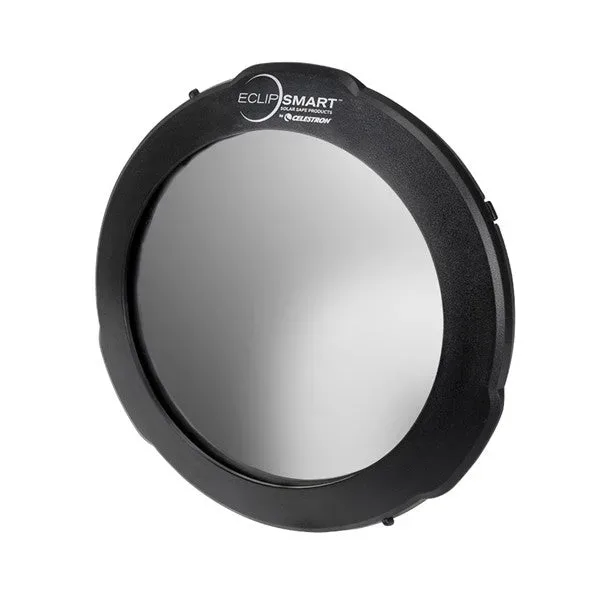
- Why this pickThis is a full-aperture filter, it covers the front of the telescope so no unsafe light ever reaches the optics, using a Celestron-proprietary 0.32mm Mylar film that meets the ISO 12312-2 safe-solar-viewing standard, made by American Paper Optics, a NASA-recommended supplier.
Pros
- Full-aperture coverage, the only filter type considered safe on the front of a telescope
- Purpose-fit for a specific, common telescope size (8" SCT/EdgeHD), not a generic clamp-on
- ISO-certified film from a NASA-recommended manufacturer, not an unverified film
Cons
- Only fits 8-inch SCT/EdgeHD tubes, not usable on other apertures or optical designs
- A dedicated purchase per telescope size, not a universal accessory
- White-light only, shows sunspots and the solar disk, not chromosphere detail like a dedicated H-alpha scope
Pointing an unfiltered telescope at the Sun causes permanent eye damage in seconds. That single fact decides how this guide is structured: safety comes before any product recommendation, not after it.
The rule that matters most: filter placement
A solar filter belongs over the front of the telescope, on the objective lens or the opening where light enters, and nowhere else. Mounting a filter at the eyepiece instead is dangerous: sunlight concentrated by the telescope's optics heats the small eyepiece-mounted filter far more than a front-mounted one, and it can crack under that heat without any warning before it fails. A cracked front filter is obvious and easy to catch before looking through the eyepiece; a cracked eyepiece filter fails exactly where your eye is.
| Filter type | Safety | Recommended? | Why |
|---|---|---|---|
| Full-aperture (front of telescope) | Safe when properly seated and undamaged | Yes | Blocks sunlight before it enters and concentrates inside the tube |
| Eyepiece filter (rear of telescope) | Dangerous, historically caused eye injuries | No, never | Concentrated sunlight inside the tube can crack it without warning |
What "ND 5.0" actually means
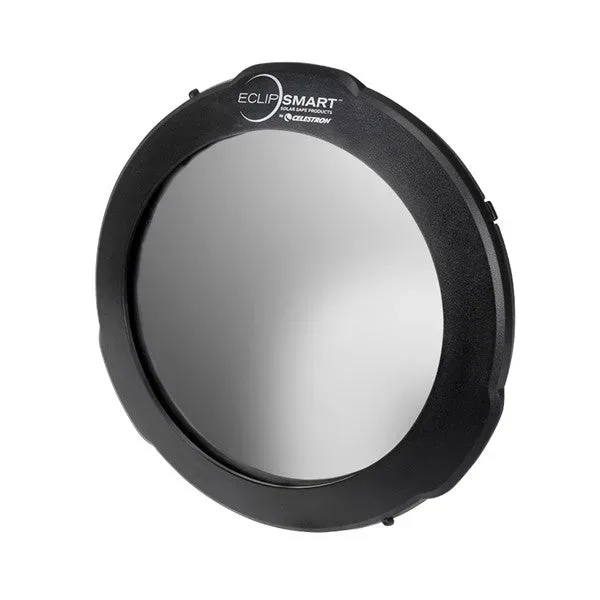
Baader AstroSolar film, the industry-standard material for DIY and commercial solar filters, comes with an optical density of 5.0, which cuts the Sun's intensity by a factor of 100,000 before it reaches your eye. That is the safety benchmark to check for when buying any solar filter, whether it's a raw sheet you mount yourself or a pre-built filter cell.
One detail worth knowing before you buy: this film is not certified to the ISO 12312-2 standard used for handheld eclipse glasses. That does not make it unsafe as a front-mounted telescope or binocular filter, where the eyepiece and objective glass filter out the remaining UV, it only means the same material should not be repurposed as a naked-eye eclipse viewer.
Buying a filter: sheet or ready-made cell
Baader AstroSolar Visual Solar Filter Film is sold as a raw sheet, in sizes like 140x155mm or A4, meant to be cut and mounted into a filter cell you build or buy separately. Building your own cell out of cardboard or a lens cap works and is the cheapest route; a pre-made commercial filter cell costs more but takes the fitting guesswork out, which matters more on larger apertures where an improvised cell is more likely to leave a gap at the edge.
White-light or H-alpha: what each one shows
| Type | What you see | Typical budget | Who it's for |
|---|---|---|---|
| White-light (e.g. Baader AstroSolar film) | The Sun's disc and sunspots | $30-100 for a DIY filter, more for a commercial cell | Anyone starting solar observing |
| H-alpha (dedicated solar telescope or filter) | Prominences, flares, and surface detail on the Sun's edge | $500+ | Observers who already have a white-light filter and want more detail |
A white-light filter is the right starting point for almost everyone: it shows sunspots clearly and costs a fraction of an H-alpha setup. H-alpha equipment reveals the Sun's edge in far more detail, including prominences arcing off the surface, but the cost jump is large enough that it's worth trying white-light observing first to confirm the interest is there.
Before you point anything at the Sun
Check the filter for pinholes, tears, or loose edges every time before use, even on a filter you've used before, film can develop small damage from storage or handling that isn't obvious at a glance. If a filter shows any sign of damage, do not use it; the cost of a replacement sheet is not worth the risk. For the rest of your setup routine, our general usage guide covers the basics that still apply during the day, before you add a filter to the mix.