
- Key Facts
- Rating8.2/10
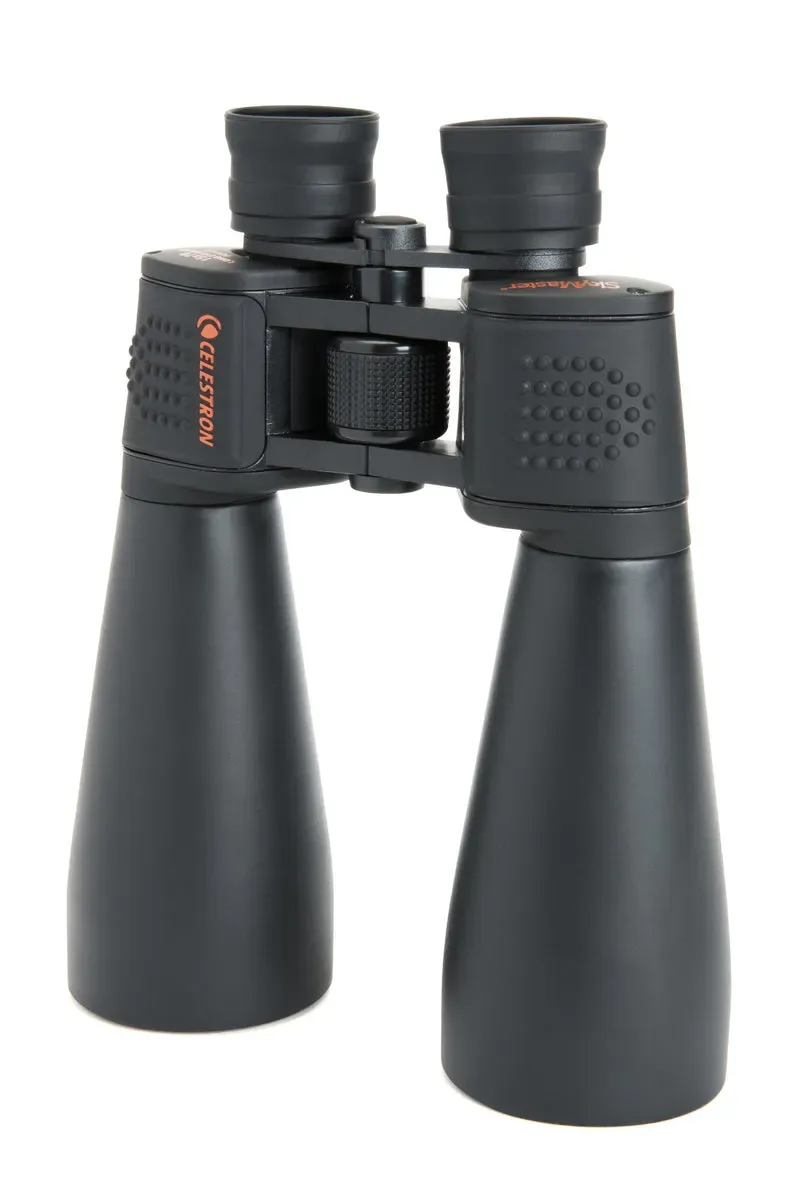
- Why this pickAt 70mm objective lenses and 15x magnification, it gathers far more light than a typical 8x42 pair without tipping into tripod-only territory the way the 20x80 and 25x100 models do, it's the one SkyMaster size most buyers can actually use spontaneously, no setup required.
Pros
- Large enough aperture for real deep-sky and lunar detail
- Still light enough to hand-hold for short observing sessions
- Tripod adapter included for when hand-holding starts to shake
Cons
- Noticeably heavier than an 8x42 pair, arm fatigue sets in within 10-15 minutes
- 15x magnification amplifies hand shake more than lower-power binoculars
- No image stabilization, a tripod is recommended for anything beyond quick looks
Celestron is best known for telescopes, but the company also builds two binocular lines aimed squarely at stargazers: SkyMaster, a family of large-aperture binoculars built for the night sky, and Nature DX, a smaller all-purpose pair that doubles as a casual astronomy tool. If you already know Celestron from its telescope lineup, this is the other half of what the brand sells, and for a lot of first-time buyers, it's a cheaper, simpler starting point than a telescope.
SkyMaster: built for the night sky
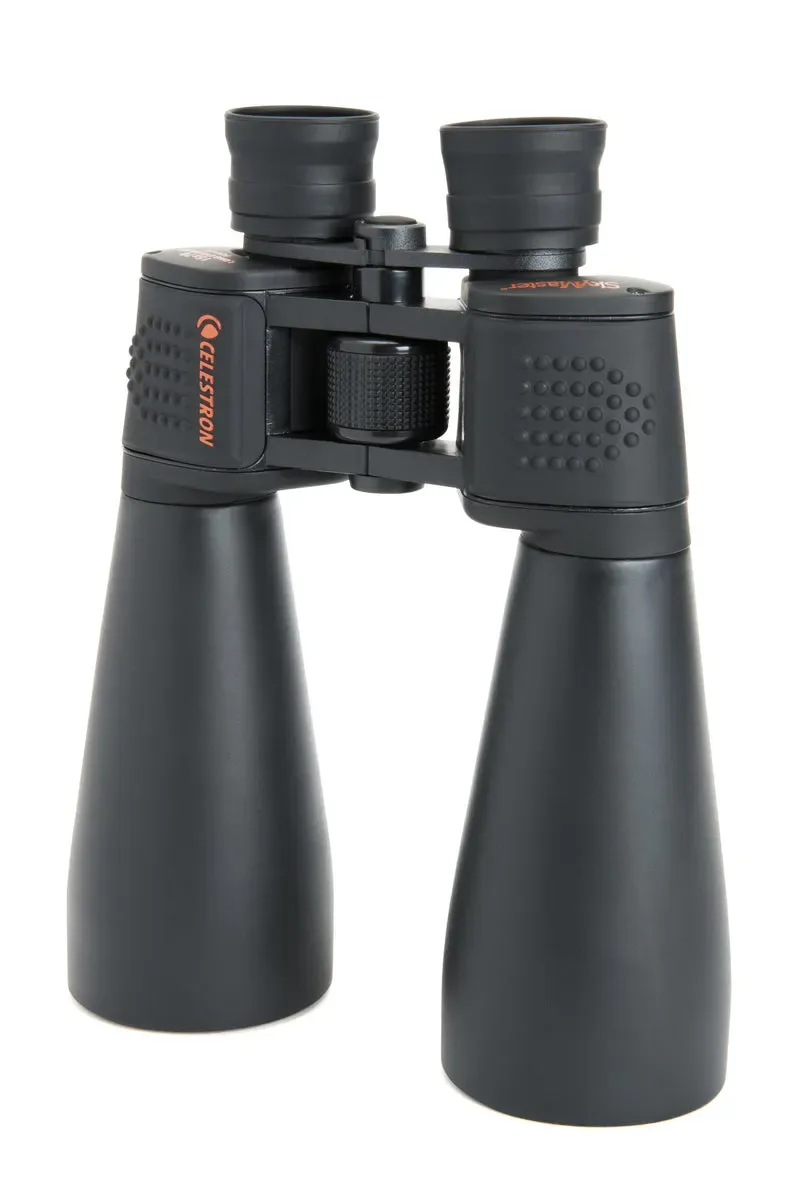
Celestron sells four SkyMaster models: the 15x70 at $129.95, the 20x80 at $209.95, the 25x70 at $139.95, and the 25x100 at $519.95, plus an upgraded SkyMaster Pro 20x80 at $349.95. All of them share the same idea, big objective lenses that pull in far more light than a typical daytime pair, which is what makes faint stars, star clusters, and the Moon's craters visible.
The 20x80 is the size most people land on. Celestron lists a 3.7° field of view (195 feet at 1000 yards), a weight of 75 oz (2126 g), 18mm of eye relief, a 4mm exit pupil, and BaK-4 prisms, and it ships with an integrated tripod adapter rod built into the housing. That last detail matters more than it sounds, at this size and magnification, a tripod isn't optional gear you might add later, it's part of how the binoculars are meant to be used.
Nature DX: the one you can actually carry all day
The Nature DX line is a different product for a different job. It comes in two versions: the standard 8x42 at $179.95 and the Nature DX ED 8x42 at $229.95, which adds extra-low dispersion (ED) glass for a $50 premium. Where SkyMaster is built for the sky specifically, Nature DX is a general-purpose binocular, birding and daytime nature use most of the time, with the Moon and bright star clusters as a nighttime bonus.
It weighs 22.2 oz (629 g), about a quarter of what the SkyMaster 20x80 weighs, has a 388-foot field of view at 1000 yards, focuses down to 2 meters, and is fully waterproof with a nitrogen-purged housing that won't fog internally. The prisms are phase-corrected BaK-4 with fully multi-coated lenses. None of that is astronomy-specific, it's a well-built pair of general nature binoculars that happens to work fine pointed up instead of out.
SkyMaster or Nature DX: which one should you buy?
The honest answer depends on whether you want a dedicated astronomy tool or a binocular that does double duty.
| Series | Magnification Range | Best Use | Portability |
|---|---|---|---|
| SkyMaster | 15x–25x | Dedicated astronomy: Moon, star clusters, wide star fields | Tripod-oriented, not built for daytime carry |
| Nature DX | 8x | Dual-purpose: birding/nature by day, casual stargazing and Moon views by night | 629 g, handheld all day |
If astronomy is the only reason you're buying binoculars, SkyMaster gives you more aperture and more reach for the money. If you also want something for hiking, birding, or general outdoor use, and you're fine with a more modest view of the night sky in exchange, Nature DX is the more versatile buy.
Picking a SkyMaster size: 15x70, 20x80, or 25x100
| Model | Price | Weight | Tripod Required? | Best For |
|---|---|---|---|---|
| SkyMaster 15x70 | $129.95 | Lighter, handheld-friendly | Optional for short sessions | First large binocular, casual stargazing |
| SkyMaster 20x80 | $209.95 | 75 oz / 2126 g | Recommended for extended use | Serious backyard observing, star clusters, the Moon |
| SkyMaster Pro 20x80 | $349.95 | Similar to standard 20x80 | Recommended | Buyers who want upgraded coatings/build over the standard 20x80 |
| SkyMaster 25x100 | $519.95 | Heaviest in the lineup | Required | Maximum light gathering, dedicated astronomy use only |
The 15x70 is the easiest entry point, light enough to hold steady for short stretches, still big enough to show far more than any 8x or 10x binocular. The 20x80 is the size most serious backyard observers settle on, and Celestron builds a tripod adapter into it for exactly that reason. The 25x100 is the specialist's choice: maximum light-gathering, but heavy enough that it's essentially unusable without a tripod or parallelogram mount. Nobody buys the 25x100 as a first pair.
Does the SkyMaster Pro justify the extra cost?
The Pro 20x80 costs $140 more than the standard 20x80 for the same 20x magnification and 80mm aperture. That premium buys upgraded coatings and build quality rather than a different optical formula, worth it if you plan to use the binoculars heavily for years, less obviously worth it if you're not sure astronomy binoculars are going to become a regular hobby yet.
Does the Nature DX ED glass matter for astronomy?
ED glass reduces chromatic aberration, the color fringing that shows up around high-contrast edges. It's a genuinely useful upgrade for daytime nature viewing, where you're looking at branches and feathers against bright sky. For astronomy specifically, most of what you're viewing (stars, the Moon) doesn't have the kind of high-contrast edge detail where chromatic aberration is very noticeable at 8x, so the ED upgrade matters more if nature/birding is a real use case for you than if astronomy is the only reason you're buying.
Do you need a tripod?
Only for the SkyMaster line, and only past a certain size. The Nature DX 8x42 is light enough to hand-hold indefinitely. The SkyMaster 20x80, at 2126 g and 20x magnification, will shake noticeably in hand within a minute or two, Celestron builds the tripod adapter directly into the housing because the company expects most buyers to eventually mount it. The 25x100 should be considered tripod-only from the start.
Frequently asked questions
Which Celestron binocular series is better for astronomy: SkyMaster or Nature DX? SkyMaster, if astronomy is the primary use, larger aperture and higher magnification pull in more light and show more detail. Nature DX is the better all-around choice if you also want a binocular for daytime use.
What size SkyMaster should I buy? The 15x70 is the easiest first choice; the 20x80 is the most popular size for serious backyard observing and includes a tripod adapter; the 25x100 is a specialist, tripod-only option.
Is the SkyMaster Pro worth the extra $140 over the standard 20x80? It's the same 20x80 optical spec with upgraded coatings and build, a reasonable upgrade for heavy, long-term use, not essential for occasional stargazing.
Does the Nature DX ED glass help for astronomy? It reduces color fringing, which matters more for daytime nature viewing than for most astronomy targets at 8x magnification.
Do I need a tripod for Celestron astronomy binoculars? Not for the Nature DX 8x42. For the SkyMaster 20x80 and above, yes, Celestron builds a tripod adapter into the 20x80 for that reason, and the 25x100 is effectively unusable handheld.
Sources
- [S001] Celestron.com : Binoculars collection page
- [S002] Celestron.com : SkyMaster 20x80mm Porro Binoculars
- [S003] Celestron.com : Nature DX 8x42mm Roof Binoculars (404 on direct fetch, data cross-checked via retailer listings)
- [S004] Optics4Birding : Celestron Nature DX 8x42 Binoculars