
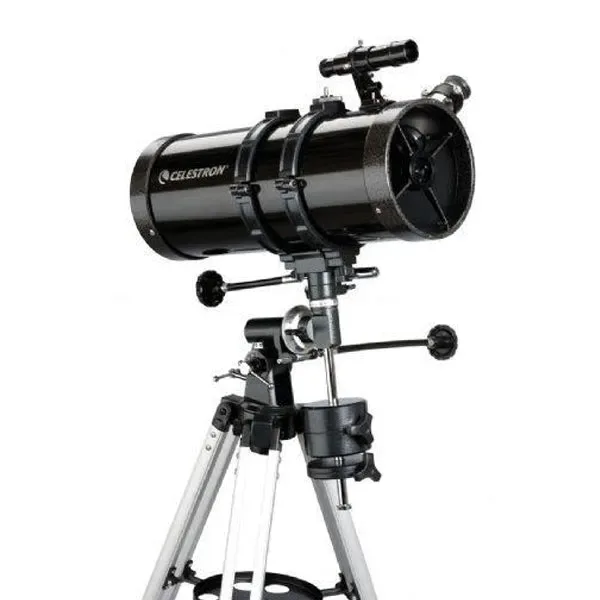
- Key Facts
- Rating7/10
- Why this pickAt $189.95 it undercuts the AstroMaster 114EQ by roughly $150 while offering a larger 127mm aperture, the trade-off is a lighter, less rigid mount that needs a gentle touch, which is why it suits a budget-first buyer testing the hobby rather than someone chasing planetary detail.
Pros
- Lowest price of any 127mm reflector we cover
- Equatorial mount teaches real tracking, not just point-and-look
- 3x Barlow lens adds real versatility to the included eyepieces
- Confirmed in stock and shipping free at OPT Telescopes
Cons
- Lightweight mount flexes noticeably at higher magnifications
- No motor drive, tracking is entirely manual
- Included eyepieces are basic; most owners upgrade within the first year
Cheap doesn't have to mean bad, but it does mean you have to know where the real compromise sits. Below about $150, the optics are usually fine and the mount is the weak point. Push into the $150-$229 range and you get a genuinely capable first telescope. Here's where the line actually falls.
Budget tiers, with a real pick in each one
| Price range | What to expect | Best pick in this range |
|---|---|---|
| Under $150 | Real optics but a basic manual mount; fine for the Moon and bright planets | Entry FirstScope/Firstlight-tier models |
| $150-$229 | A more capable reflector with real accessories bundled in | Celestron PowerSeeker 127EQ, $229.95 |
| $399+ | Sturdier mount, larger aperture, less compromise | See our full beginner guide |
Our budget pick: Celestron PowerSeeker 127EQ
At $229.95 direct from Celestron, the PowerSeeker 127EQ is a 127mm (5") Newtonian reflector with a 1000mm focal length. That's real aperture for the price, not a toy-grade compromise. It ships with 20mm and 4mm eyepieces, a 3x Barlow lens, and Starry Night Basic software with a 36,000-object database. The one catch: it sits on a manual German equatorial mount, which takes a night or two to get comfortable with compared to a simpler alt-azimuth setup. We cover it in full detail in our PowerSeeker 127EQ review.
The two included eyepieces cover a useful spread: with a 1000mm focal length, the 20mm eyepiece gives roughly 50x magnification, a good starting point for framing the Moon or a star cluster, while the 4mm eyepiece pushes to roughly 250x for closer looks at planetary detail. The 3x Barlow triples whichever eyepiece you pair it with, but it's worth knowing that a 127mm aperture has a practical magnification ceiling, as a rule of thumb, useful magnification tops out around 2x the aperture in millimeters, so roughly 250x here. That means the Barlowed 20mm eyepiece is genuinely useful, while stacking the Barlow onto the 4mm eyepiece pushes past what the optics can actually resolve cleanly; the image just gets dimmer and softer rather than more detailed. Starry Night Basic's 36,000-object database is mainly useful for planning a session in advance, since the manual mount still means locating and centering every target by hand.
Where the real compromise sits
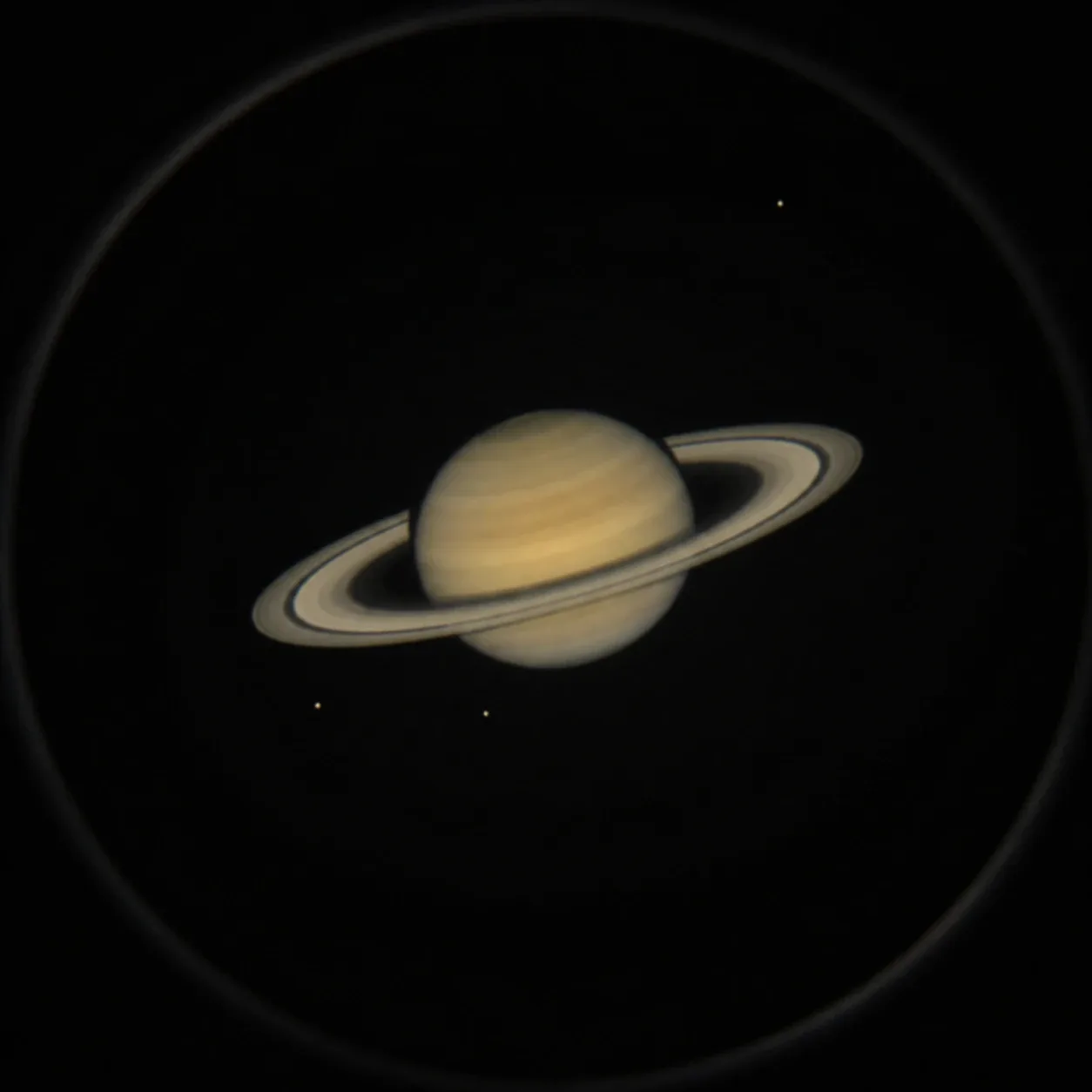
At reputable budget price points, the optics themselves usually aren't the problem, the mount is. A tube that can technically resolve Saturn's rings still looks shaky and unusable if the tripod flexes every time you touch the focuser. That's the actual failure mode to watch for, more than any spec on the box.
This is exactly the trade-off the PowerSeeker 127EQ makes deliberately: it spends the budget on a larger 127mm mirror rather than a heavier mount, on the reasoning that a beginner benefits more from extra aperture than from mount rigidity they may not push hard enough to notice yet. That calculation flips once you're routinely observing at higher magnification, which is why the mount is the first thing most PowerSeeker owners eventually upgrade or replace, not because the optics disappointed them, but because they grew into wanting a steadier platform for the views the optics were already capable of.
See current budget telescope prices at OPT Telescopes /go/opt-telescopes)
Small and compact isn't automatically worse
A smaller telescope trades some aperture for portability, which is a fair trade if you'll actually take it outside more often because it's lighter. The mistake is buying small because it's cheap rather than because you specifically want something portable; if portability is the goal, our portable and travel telescope guide covers that angle directly.
Budget brands worth trusting vs. ones to skip
Sticking with an established telescope brand at a low price, rather than an unfamiliar brand at an even lower one, is the simplest way to avoid the worst outcomes: eyepieces that don't actually reach focus, or a mount that arrives already loose. The PowerSeeker sits inside Celestron's full lineup, which we cover brand-wide in our Celestron review.